
Low Back Pain Treatment in Johnston
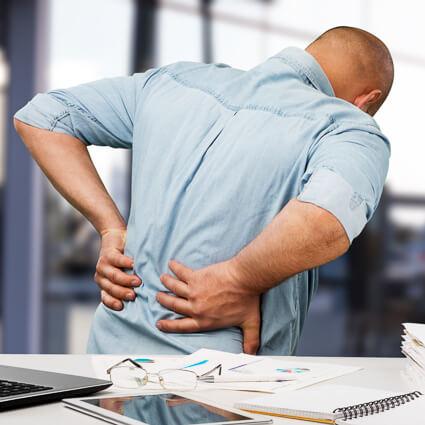 Lower back pain can make just about everything harder. Getting out of bed, lifting groceries, sitting through a workday. Tasks that used to be automatic now require planning around the pain. Mechanical back pain is the most common form of back pain, and it responds well to the right kind of care.
When Your Back Pain Has a Structural Root
Mechanical back pain originates from the physical structures of the spine, including muscles, ligaments, discs, facet joints, and vertebrae, rather than from disease, infection, or fracture. It develops when these structures are placed under abnormal stress, whether from a single injury or years of accumulated strain. The pain is real and often significant, but it’s also mechanical in origin, which means addressing the underlying structural issue is the most direct path to lasting relief.
The Habits and History That Load the Spine
Most mechanical back pain doesn’t come from one dramatic event. It builds. A combination of factors creates the conditions for pain:
- Spinal misalignments or facet joint dysfunction from old or new injuries
- Disc problems, including bulging, protrusion, or herniation
- Degenerative disc changes that reduce height and shock absorption
- Sacroiliac joint irritation or pelvic misalignment
- Muscle strains, ligament sprains, or repetitive overuse
- Poor posture, weak core muscles, prolonged sitting, or excess body weight
Common structural causes also include facet joint irritation, spinal osteoarthritis, and spinal stenosis, all of which can affect how the spine moves and tolerates daily activity.
The Full Spectrum of How It Feels
Mechanical back pain doesn’t always present the same way. For some people, it’s a dull, persistent ache in the lower back. For others, it’s sharp and stabbing with certain movements. Stiffness and a limited range of motion are common, particularly in the morning or after sitting for long periods. Pain may radiate into the buttocks or upper thighs.
Movement tends to worsen symptoms, although some patients find relief with rest or position changes. Muscle spasms, a sense of tightness, and general fatigue in the low back are also common.
When Rest Isn’t Enough Anymore
If your back pain has lasted more than a few days, is recurring, or is interfering with work and daily life, that’s a signal your spine needs more than rest. Pain that keeps returning after brief improvement, that limits how long you can sit or stand, or that makes you dread physical activity is telling you something mechanical isn’t right.
Patient Testimonials
-
 My profession as a Paramedic, I deal with a lot of lifting of patients on a daily basis. Recently, I suffered a lower back injury that hindered me from working. I approached Dr. Schultz with my situation and was more than willing to to get me back to work in a short amount of time. I grew up going to chiropractors, so knew what to expect. So as I got started with my adjustments, it was a new experience for me and his methods were like nothing I had encountered. He does practice Gonstead but brings a new approach and makes it his own method. I was back to work within one week and now, 3 weeks later, I have recovered from the injury and will continue to see Dr Schultz for my future adjustments.
-
I was unable to walk without pain in my lower back and left leg.
After my treatments, I now walk at least one mile daily without discomfort and I’m able to sit for longer periods of time.
Dr. Schultz was honest concerning my prognosis, and his treatment was conservative because of the advanced condition of my spine.
I am now more mobile and my activity is not as limited. My mental health has greatly improved also as the pain eased. I have learned to live with a few of my limitations for my age (77). I also come for periodic treatments now to keep everything in alignment.
I realize that any continued progress depends on my following rules for exercise and activity and chiropractic care.
-
I am a carpet installer, and have done so for years. I came to Dr. Schultz two years ago when I couldn’t bend over to tie my shoes anymore. The pain was so intense that my whole body leaned severely to one side. I had tried everything, but the pain wasn’t going away. My report of findings indicated that I was headed toward possible referral to a surgeon and that I would possibly loose my job.
I did my best to follow Dr. Schultz’s recommendations from the spinal care class as he treated me. I was given immediate relief after the first visit so that I could walk straight again. After six weeks I was back to work.
I’m sure glad that I tried Dr. Schultz! I may have had back surgery if he hadn’t treated me.
I also liked how his computer charted my progress and helped determine when it was safe to return to work.
-
Before coming to Dr. Schultz I had chronic low back pain which I’ve suffered from for about two years. My episodes would get so bad that I was often unable to walk, sit, or stand without severe pain. I’m a person who likes to stay active, whether it’s doing home projects, biking, or rollerblading. My chronic back pain would often prevent me from doing these activities, as well as others.
I have tried three other chiropractors, none of which had brought me as far in my recovery process as Dr. Schultz. He utilizes new technology to help him accurately pinpoint the cause of pain and put me on the road to recovery.After two months of treatment, I have not had any reoccurrence of low back pain. I am back to doing my everyday tasks without any discomfort or fear of reinjury.
Today I can do anything I want and that makes me feel great both physically and mentally. -
Before seeing Dr. Schultz, the pain in my lower back was so bad that it was almost hard to walk. Some days I only wanted to stay in bed…and I did. Being that I am in the real estate business, I have open houses every Sunday in which I must stand and greet people for hours. This would really take its toll on my back. Now after my treatments with Dr. Schultz, I don’t have any pain or discomfort.
The headaches I had and the continuous heartburn that I was experiencing before I began my treatment with Dr. Schultz have now all disappeared as well. Dr. Schultz takes you to a “safe island” where even before he begins treatment he tells you what he recommends and how to achieve it. He is very thorough in his explanations. If you follow what Dr. Schultz prescribes, even if you are on a busy schedule such as myself, you will be so much healthier and happier. People are constantly asking me what I’m doing because I “look different.” I simply tell them to go see Dr. Schultz!
-
I experienced a dull pain in my lower back for about 8 months. Then one day while working, it became so painful I couldn’t even stand up.
After getting my treatments, I’m out of pain. If feel more flexibility and my back doesn’t
tend to hurt when I sit. I just come for monthly check-ups now.I liked Dr. Schultz’s screening of me first to see if chiropractic care would help me. After he determined that chiropractic care would help, his treatments were gentle and painless.
Dr. Schultz also works with my neck. I use to get headaches up the back of my head, but
since Dr. Schultz’s treatments, my headaches have disappeared!I used to have doubts about chiropractic care until I came to Dr. Schultz. I now feel that had I gone to another type of doctor, I would have ended up with back surgery. That would have also caused prolonged time off work and loss of income. My care here has helped me a lot.
-
On a scale of 1 to 10, I was definitely an 8 with the pain that I had in my lower back and down my left leg. I couldn’t stand, sit, or walk any amount of distance and riding in a car was absolutely terrible. After the treatments, I am not limited to anything now and I am back to normal.
I had never been to a chiropractor before, but now I am a believer. Dr. Schultz is very sympathetic and if you do what he tells you, he will be able to help you.
-
When I first came to see Dr. Schultz, I had severe pain in my lower back and numbness down my left leg. I could not bend over or stand for long periods of time. After the treatments, I no longer have any numbness in my leg and I can lift more and bend further than I’ve been able to in a long time. I was surprised when other health problems that I had been experiencing, such as my elbows and shoulders became nearly pain free and my headaches were less frequent.
I didn’t think that chiropractic care was for me. Surgery would have been the next step. However, since I’ve been going to Dr. Schultz I don’t think I’ll need surgery after all. His friendly approach and personality make you feel right at home with every treatment.
-
I have been having problems with hip and back pain for 3 years. I have been through multiple bouts of physical therapy at specialized gyms. Dr. Schultz was completely different. He took the time to work with me and help me get to the point I am today…pain free! I must also say I have never been comfortable with neck adjustments but he does it with such ease and control so I do not feel like my head is about to rip off. If you are in the area, go to Schultz Chiropractic & Acupuncture! They will take care of you.
From Diagnosis to a Plan That Works for Your Back
Dr. Schultz begins with a thorough history and physical examination, and often X-ray analysis, to identify the specific source of your pain. When appropriate, he orders and interprets MRI studies and coordinates referrals to trusted specialists. No two cases are identical, and the care plan is built around your findings.
Treatment typically draws from spinal adjustments to restore joint mobility and reduce nerve irritation, Cox Flexion-Distraction for disc-related involvement, and spinal decompression when needed. Soft tissue therapies, acupuncture, infrared therapy, and targeted rehabilitation exercises round out the approach, addressing inflammation and building the strength and stability that keep problems from returning.
Moving With Less Pain and More Confidence
Mechanical back pain doesn’t have to be something you manage indefinitely. Schultz Chiropractic & Acupuncture has helped thousands of patients in the greater Des Moines area identify what’s driving their back pain and get back to living without it. Schedule your evaluation today.
