
Herniated Disc Treatment in Johnston
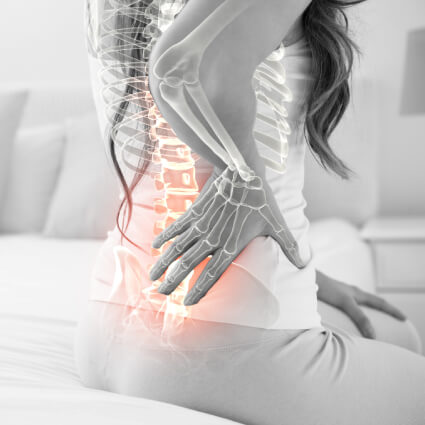 A herniated lumbar disc can stop you in your tracks. The combination of deep lower back pain and shooting leg pain makes it hard to sit, drive, sleep, or get through a workday. The encouraging news is that the vast majority of cases, up to 90%, improve with conservative, non-surgical care.
What’s Actually Happening Inside the Disc
The intervertebral discs act as cushions between each vertebra, with a tough outer ring surrounding a soft, gel-like center. When the outer ring weakens or tears, the inner material can push outward. This is what’s known as a herniation or protrusion. At the lumbar level, this most often affects L4-L5 or L5-S1, the segments that bear the most load.
When the displaced material presses against a nearby nerve root, it can trigger not only local back pain but also the radiating leg symptoms many patients describe as sciatica.
What Drives a Disc to Herniate
Disc herniations rarely happen without warning signs. They tend to develop from a combination of factors that have been building over time:
- Age-related degeneration that reduces disc hydration and elasticity
- Sudden trauma, such as lifting heavy objects with improper mechanics
- Repetitive stress from bending, twisting, or long hours of sitting
- Poor posture and weak core muscles that leave the disc unsupported
- Previous spinal injuries or genetic predisposition
The Pain Pattern That Points to a Disc Problem
Lower back pain that travels down one leg is the hallmark of a herniated lumbar disc. Patients often describe it as sharp, burning, or electric-shock-like, running through the buttock and into the thigh, calf, or foot.
Numbness, tingling, and muscle weakness in the leg or foot are also common. Sitting, bending, lifting, coughing, and sneezing typically make symptoms worse. Some patients find relief with movement or specific positions, while others struggle to find any comfortable arrangement.
When needed, Dr. Schultz can order and review MRI studies and coordinate referrals to trusted specialists to ensure an accurate diagnosis.
When the Pain Is Telling You It Won’t Resolve on Its Own
If leg pain, numbness, or weakness has persisted for more than a few weeks, or if you’re altering how you move, sit, or sleep to manage symptoms, it’s time for a professional evaluation. Catching a disc problem early and treating it properly reduces the risk of nerve damage and speeds recovery.
Decompression, Adjustments, and a Plan Built Around Your Disc
Schultz Chiropractic & Acupuncture places a strong emphasis on Cox Flexion-Distraction for lumbar disc conditions. This gentle, non-thrust technique uses a specially designed table to create negative pressure within the disc, which helps retract herniated material, reduce nerve compression, and restore nutrient flow for healing. It’s one of the most effective and comfortable approaches available for disc-related pain.
Spinal decompression therapy provides additional traction to further relieve disc and nerve pressure. Spinal adjustments restore proper alignment and improve joint mobility without aggravating the disc. Acupuncture, soft tissue therapies, and targeted rehabilitation address inflammation, muscle imbalances, and core stability, building the foundation that protects the disc going forward.
What Recovery Tends to Look Like
Most patients notice a decrease in leg symptoms first, followed by gradual improvement in lower back pain and mobility. As the disc heals and nerve pressure eases, daily activities become more manageable. The longer-term goal is restoring enough structural integrity that you’re not constantly guarding against re-injury.
If herniated disc pain has been limiting your movement or disrupting your sleep, contact Schultz Chiropractic & Acupuncture today to book your consultation.
